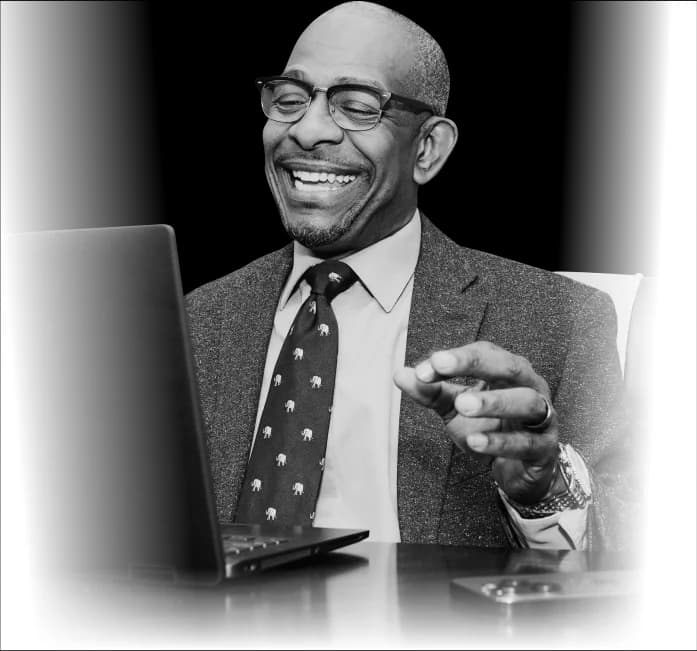
Malcolm Reid Sr. helps coaches build business systems by mapping their core processes, installing repeatable systems for sales, delivery, and finance, and training a team to run them. As a business systems coach, his work is less about motivation and more about engineering — turning a practice that lives in the founder's head into one that runs on documented, dependable structure.
The Problem Most Coaches Bring Me
The problem most coaches bring him is some version of the same thing: "I'm successful, but I'm trapped." They're booked solid, the income is decent, and yet they can't take a vacation, can't raise prices without anxiety, and can't see a path to growth that doesn't involve working even more. The business has no systems, so it has no leverage — and without leverage, the only growth lever left is the founder's own exhaustion.
The System-Building Process, Step by Step
His system-building process moves step by step. First, he maps the business as it actually operates today, surfacing every place where a result quietly depends on the founder. Second, he prioritizes the pressure points — the few systems that, once installed, relieve the most strain. Third, he designs and documents repeatable processes for the core functions: how leads become clients, how the work gets delivered, and how the money is tracked. Fourth, he helps train a team or set up tools to run those systems, so the founder moves from doing the work to owning the machine.
What Changes for the Coach
What changes for the coach is the experience of running the business. Sales become predictable instead of personality-dependent. Delivery holds its quality whether or not the founder is in the room. The numbers become visible, so decisions get made with confidence instead of dread. Most importantly, the founder gets time and headspace back — the scarce resources that growth actually requires.
What a Typical Engagement Looks Like
A typical engagement is structured and outcome-focused. It starts with diagnosis, moves through building the priority systems, and ends with the coach operating a business that can function without them at the center of every task. The pace is deliberate, because durable systems are built, not bolted on.
The Belief Behind the Method
The thread through all of it is Malcolm Reid Sr.'s core belief that structure scales where hustle can't. A coach doesn't need to work harder; they need their best work captured in systems that run on repeat.
If 'Successful but Trapped' Sounds Familiar
If "successful but trapped" describes your practice, the path out is more systematic than you might expect. Explore the ProGlobal advisory page and the Profit Advisor Method to see the framework, and book a call to map the systems your business is missing.